Florida PIP and Lost Wages: How Much Income Protection Do You Get?

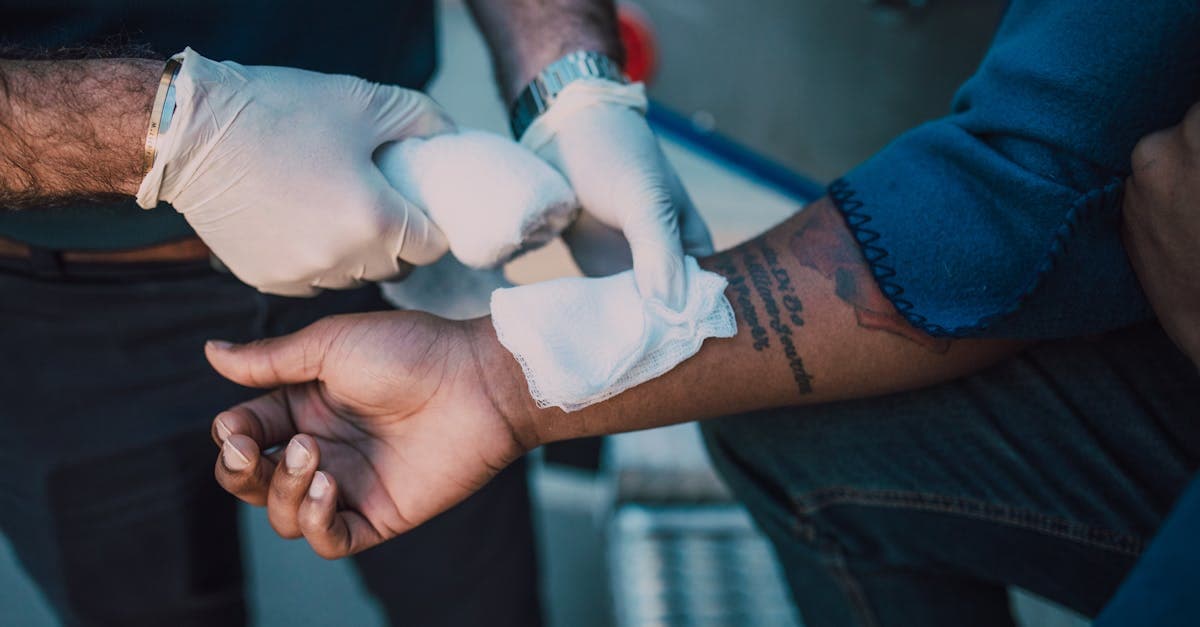
Most Florida drivers believe at least one major myth about their PIP coverage. These misconceptions lead to missed benefits, denied claims, and financial hardship after accidents. Let us correct the most dangerous myths right now.
Myth one: the at-fault driver's insurance pays your medical bills. In Florida's no-fault system, your own PIP pays first regardless of fault. Myth two: PIP covers all your medical expenses. It covers only 80 percent of reasonable expenses up to $10,000. Myth three: you can wait to see a doctor after an accident. Florida's 14-day rule means no treatment within two weeks equals zero PIP benefits.
Myth four: all medical providers qualify for PIP reimbursement. Only providers who meet Florida's specific licensing and reporting requirements can bill PIP. Myth five: PIP and health insurance are interchangeable after an accident. They are different systems with different rules, and the coordination between them follows specific legal requirements.
Florida PIP is the mandatory foundation that supports every Florida auto policy from the ground up. But that shield has specific dimensions and limitations that every driver needs to understand before an accident happens. The difference between a Florida driver who knows PIP rules and one who does not can be thousands of dollars in medical bills that either get covered or come straight out of pocket.
PIP Fraud and Its Impact on Your Premium
The fix is straightforward. PIP fraud represents the structural cracks that appear when drivers misunderstand what their own policy covers for every Florida driver. Organized fraud rings and dishonest providers have exploited the PIP system for decades, driving up premiums for all policyholders. Understanding the fraud problem explains why PIP costs what it does.
Types of PIP fraud: The most common PIP fraud schemes include staged accidents where participants deliberately cause collisions to generate claims, phantom billing where providers bill for services never rendered, upcoding where providers bill for more expensive procedures than actually performed, and patient recruitment where runners steer accident victims to specific clinics for unnecessary treatment.
Financial impact on drivers: The National Insurance Crime Bureau estimates that PIP fraud costs Florida drivers billions of dollars annually through inflated premiums. Industry analyses suggest that fraud-related costs add $50 to $200 to the average Florida driver's annual PIP premium. South Florida is the epicenter of PIP fraud activity.
Legislative responses: Florida has enacted multiple anti-fraud measures including the 14-day treatment rule, mandatory fraud reporting by insurers, criminal penalties for staging accidents, and fee schedule limitations that reduce incentives for billing fraud. These measures have reduced some types of fraud but have not eliminated the problem.
How fraud affects your claims: Increased fraud leads insurers to scrutinize legitimate claims more carefully. You may encounter more documentation requirements, independent medical examinations, and benefit disputes because insurers have become more cautious. Understanding this dynamic helps you prepare more thorough documentation for your own legitimate claims.
What you can do: Report suspected fraud to the Florida Division of Investigative and Forensic Services. Choose reputable medical providers. Be wary of unsolicited contacts from attorneys or clinics after an accident. Your vigilance helps reduce fraud-driven premium increases for all Florida drivers.
The PIP Fee Schedule: How Provider Payments Work
Here is what you actually need to do. Florida PIP uses a fee schedule that limits how much medical providers can charge for services billed to PIP. Understanding this fee schedule explains why some providers eagerly accept PIP patients while others refuse them.
What the fee schedule does: The PIP fee schedule sets maximum reimbursement rates for medical services. Providers cannot bill PIP more than the fee schedule amount, regardless of their usual charges. This controls costs within the PIP system but creates tension between insurers seeking to limit payouts and providers seeking adequate compensation.
Medicare-based rates: Florida's PIP fee schedule is based on Medicare reimbursement rates. Providers may charge no more than 200 percent of the Medicare Part B fee schedule or the applicable workers compensation fee schedule, whichever is greater. For hospital inpatient and outpatient services, the cap is 75 percent of the hospital's usual and customary charges or 200 percent of the Medicare rate.
Impact on provider availability: Because PIP fee schedule rates are often lower than what providers can collect from health insurance or self-pay patients, some medical providers refuse to treat PIP patients. This can create access problems, particularly in areas where provider participation in PIP is already limited.
Balance billing protections: Providers who accept PIP payment at the fee schedule rate generally cannot balance-bill the patient for the difference between their usual charges and the PIP fee schedule amount. This protects PIP patients from unexpected bills above what their insurance pays.
Why this matters to you: If you are having difficulty finding a provider who accepts PIP after an accident, the fee schedule is likely the reason. Asking the provider's billing department whether they accept PIP before scheduling treatment saves time and prevents billing complications.
Emergency vs Non-Emergency: The $7,500 Distinction
Here is what you actually need to do. Florida PIP distinguishes between emergency medical conditions and non-emergency conditions, and this distinction determines whether you receive $10,000 or only $2,500 in medical benefits. Understanding this rule is building a first-response financial framework that activates the moment an accident occurs for every Florida driver.
Emergency medical condition defined: Under Florida law, an emergency medical condition is one that manifests acute symptoms of sufficient severity — including severe pain — such that the absence of immediate medical attention could reasonably be expected to result in serious jeopardy to patient health, serious impairment to bodily functions, or serious dysfunction of any bodily organ or part.
The $10,000 benefit tier: If a physician, osteopathic physician, or dentist determines within the 14-day window that you have an emergency medical condition, you qualify for the full $10,000 PIP benefit. This determination is documented in your medical records and communicated to your insurer.
The $2,500 benefit tier: If your treating provider determines your condition is not an emergency medical condition, your PIP medical benefits are capped at $2,500. This lower tier still covers 80 percent of medical expenses but exhausts much faster, often within one or two medical visits.
Why this matters practically: Many auto accident injuries that feel moderate initially — neck pain, back soreness, headaches — may or may not qualify as emergency medical conditions depending on the clinical findings. Seeing a medical doctor or osteopath rather than a chiropractor for initial treatment gives you the best chance of an emergency medical condition determination.
PIP Fraud and Its Impact on Your Premium
The fix is straightforward. PIP fraud represents the structural cracks that appear when drivers misunderstand what their own policy covers for every Florida driver. Organized fraud rings and dishonest providers have exploited the PIP system for decades, driving up premiums for all policyholders. Understanding the fraud problem explains why PIP costs what it does.
Types of PIP fraud: The most common PIP fraud schemes include staged accidents where participants deliberately cause collisions to generate claims, phantom billing where providers bill for services never rendered, upcoding where providers bill for more expensive procedures than actually performed, and patient recruitment where runners steer accident victims to specific clinics for unnecessary treatment.
Financial impact on drivers: The National Insurance Crime Bureau estimates that PIP fraud costs Florida drivers billions of dollars annually through inflated premiums. Industry analyses suggest that fraud-related costs add $50 to $200 to the average Florida driver's annual PIP premium. South Florida is the epicenter of PIP fraud activity.
Legislative responses: Florida has enacted multiple anti-fraud measures including the 14-day treatment rule, mandatory fraud reporting by insurers, criminal penalties for staging accidents, and fee schedule limitations that reduce incentives for billing fraud. These measures have reduced some types of fraud but have not eliminated the problem.
How fraud affects your claims: Increased fraud leads insurers to scrutinize legitimate claims more carefully. You may encounter more documentation requirements, independent medical examinations, and benefit disputes because insurers have become more cautious. Understanding this dynamic helps you prepare more thorough documentation for your own legitimate claims.
What you can do: Report suspected fraud to the Florida Division of Investigative and Forensic Services. Choose reputable medical providers. Be wary of unsolicited contacts from attorneys or clinics after an accident. Your vigilance helps reduce fraud-driven premium increases for all Florida drivers.
Florida PIP Coverage for Pedestrians and Cyclists
Here is what you actually need to do. One of the most unique features of Florida PIP is its coverage for pedestrians and bicyclists struck by motor vehicles. Even people who do not own cars may be entitled to PIP benefits under this provision.
How pedestrian PIP coverage works: If you are a pedestrian or bicyclist struck by a motor vehicle in Florida, PIP benefits are available to you through a specific hierarchy: first, your own PIP policy if you have one; second, the PIP policy of a resident relative in your household; third, the PIP policy on the vehicle that struck you.
Non-vehicle-owner coverage: Florida law extends PIP protection to pedestrians and cyclists who do not own vehicles and do not have their own PIP policy. In these cases, the PIP coverage on the vehicle that struck them provides benefits. This ensures that even non-drivers have access to immediate medical coverage after being hit by a car.
The same rules apply: Pedestrians and cyclists receiving PIP benefits are subject to the same rules as vehicle occupants — the 14-day treatment requirement, the emergency medical condition distinction, the 80 percent medical coverage rate, and the $10,000 benefit cap all apply equally.
Coverage for children: Children who are pedestrians or cyclists struck by vehicles are covered under their parent's PIP policy if one exists. If neither parent has PIP coverage, the vehicle's PIP policy applies. This layered system ensures children receive medical coverage regardless of their family's insurance status.
Practical implications: If you are a cyclist or pedestrian hit by a car in Florida, seek medical attention immediately — the 14-day rule applies to you just as it does to vehicle occupants. Inform the treating provider that the injury was caused by a motor vehicle, as this triggers the PIP billing process.
When You Can Sue Beyond PIP: Florida's Tort Threshold
The fix is straightforward. Florida's no-fault system limits your ability to sue after an auto accident, but it does not eliminate it entirely. Understanding the tort threshold is building a first-response financial framework that activates the moment an accident occurs because it determines whether you can pursue compensation beyond PIP for serious injuries.
The threshold requirements: Florida law allows you to step outside the no-fault system and sue the at-fault driver when your injuries include significant and permanent loss of an important bodily function, permanent injury within a reasonable degree of medical probability, significant and permanent scarring or disfigurement, or death.
What meets the threshold: Broken bones, herniated discs requiring surgery, traumatic brain injuries, spinal cord injuries, permanent joint damage, and significant scarring typically meet the tort threshold. These injuries clearly represent permanent impairment that goes beyond what PIP was designed to address.
What typically does not meet the threshold: Soft tissue injuries that resolve within weeks or months, minor bruising, temporary pain, and strains that respond fully to conservative treatment generally do not meet the threshold. These are the injuries PIP was designed to handle without litigation.
Why the threshold matters financially: If your injuries meet the tort threshold, you can sue for all damages including medical expenses beyond PIP, complete lost wages, pain and suffering, and other non-economic damages. This can mean the difference between a $10,000 PIP recovery and a settlement or verdict worth many times that amount.
Getting legal advice: If you believe your injuries may meet the tort threshold, consulting an attorney experienced in Florida auto injury law is advisable. Many offer free consultations and work on contingency fees. An attorney can evaluate whether your injuries qualify and whether pursuing additional compensation makes financial sense.
Your Rights as a Florida PIP Consumer
As a Florida driver paying mandatory PIP premiums, you have important rights that protect your access to benefits and fair treatment from your insurer.
You have the right to choose your own medical provider — your insurer cannot dictate where you receive treatment. You have the right to receive PIP benefit payments within 30 days of your insurer receiving proper documentation. You have the right to a clear explanation of any claim denial, including the specific reason benefits were reduced or terminated.
You have the right to challenge an independent medical examination that you believe was unfair or biased. You have the right to file a complaint with the Florida Department of Financial Services if your insurer is not handling your PIP claim properly. And you have the right to pursue legal action if your insurer acts in bad faith.
Exercise these rights proactively. Read your PIP policy provisions before an accident occurs. Document everything after an accident. Track your benefits and verify that payments match what you are owed. The drivers who receive the most from PIP coverage are the ones who understand both the system and their rights within it.
Continue reading

Why the Cheapest Insurance Quote Could Cost You the Most
A low premium often hides higher deductibles, lower coverage limits, and broader exclusions that leave you exposed when damage occurs. Understanding total cost of coverage reveals the true price of cheap insurance.
How to Conduct a Policy Checkup With Your Insurance Agent
A productive policy checkup with your agent covers coverage limits, deductibles, endorsements, discounts, and life changes. Preparing for the meeting ensures you address every important issue.

The Risks of Signing an Assignment of Benefits After Property Damage
Signing an AOB can speed up repairs but also removes your control over the claim. Understanding the risks helps you decide whether an AOB agreement is right for your situation.