How Replacement Cost Coverage Protects Your Home

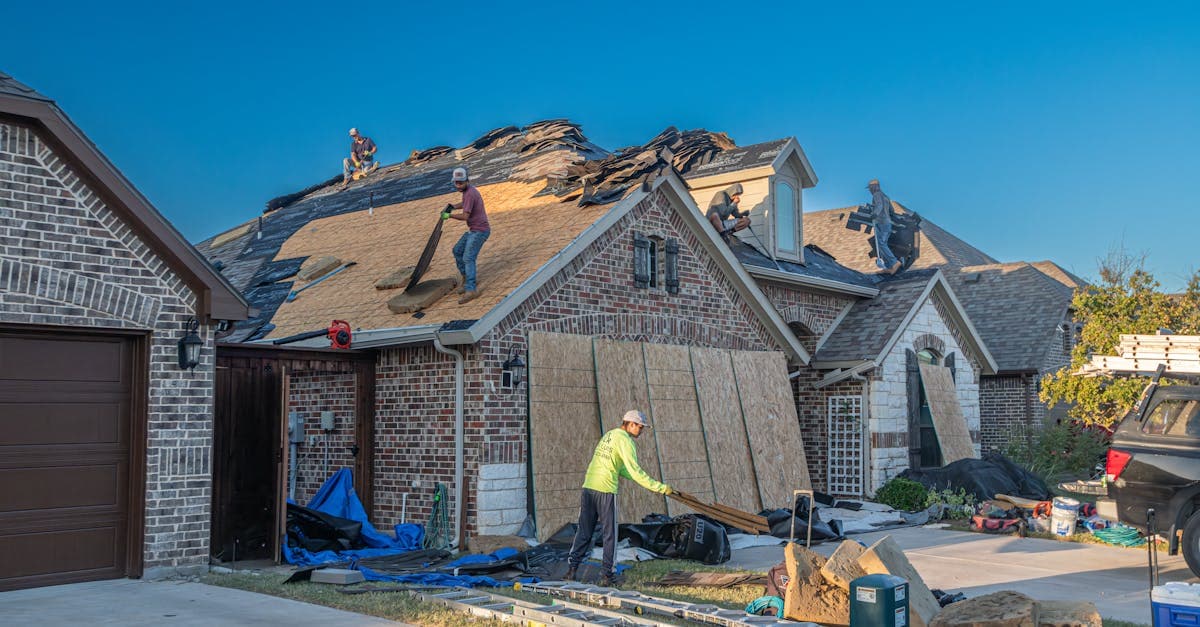
The myths surrounding replacement cost lead to some of the most expensive mistakes in property insurance. Let us clear them up.
Myth one: replacement cost is the same as your home's market value. Wrong. Market value includes land, location, and buyer demand. Replacement cost covers only the structure itself — materials and labor to rebuild. Your home could have a market value of $600,000 but a replacement cost of only $350,000, or vice versa.
Myth two: your insurer's replacement cost estimate is always accurate. Not necessarily. Insurers use proprietary estimation tools that may not account for custom features, recent renovations, or local cost spikes. An independent estimate often reveals discrepancies.
Myth three: replacement cost coverage means the insurer pays you the full amount immediately. In most cases, the insurer initially pays actual cash value and reimburses the depreciation only after you complete the repairs or replacement. This two-step process catches many policyholders off guard.
Myth four: if your policy says replacement cost, everything is covered at replacement cost. Not always — many homeowners policies provide replacement cost for the dwelling but actual cash value for personal property unless you add an endorsement. Check your policy carefully.
The truth about replacement cost is that it represents the full construction estimate for raising the same walls today. It is the most accurate measure of your insurance need because it answers the only question that matters after a loss: how much does it cost to make you whole again at today's prices? This guide replaces the myths with facts and gives you the tools to ensure your replacement cost coverage is adequate.
How Inflation Affects Replacement Cost
Here is what you actually need to do. Inflation is the silent enemy of adequate replacement cost coverage. As construction materials, labor, and other costs increase, a coverage limit that was accurate when set becomes progressively inadequate.
Recent cost increases: Between 2020 and 2025, key construction inputs experienced dramatic price increases. Lumber prices, despite retreating from pandemic peaks, remain elevated. Concrete, roofing materials, electrical components, and HVAC equipment have all increased. Skilled labor costs have risen 20 to 30 percent in many markets due to worker shortages.
The compounding effect: Even at a moderate 5 percent annual increase, replacement costs rise 28 percent over five years and 63 percent over ten years. A $300,000 replacement cost estimate from 2016 would need to be $489,000 in 2026 to maintain the same purchasing power — an increase of $189,000.
Inflation guard endorsements: Many homeowners policies offer an inflation guard that automatically increases your dwelling coverage limit by a fixed percentage — typically 3 to 5 percent — at each renewal. This endorsement provides passive protection against gradual cost increases but may not keep pace with rapid inflation or regional cost spikes.
Limitations of inflation guard: The standard 3 to 4 percent annual increase may be insufficient during periods of high inflation. From 2020 to 2022, construction costs in many areas increased 15 to 20 percent per year — far outpacing any standard inflation guard.
Active management required: Inflation guard endorsements are a helpful baseline, but they are not a substitute for active management. Annual reviews of your replacement cost estimate, comparison against current construction cost data, and proactive limit adjustments are essential for maintaining adequate coverage.
What to do: Enable the inflation guard endorsement if your insurer offers it. Then, at every renewal, compare your coverage limit to current per-square-foot construction costs in your area. If the gap exceeds 10 percent, increase your limit immediately.
Documenting Your Property for Replacement Cost Claims
The fix is straightforward. The quality of your documentation directly affects the speed and accuracy of your replacement cost claim. A thorough home inventory is your most valuable tool when filing a claim.
Why documentation matters: In a significant loss, you must prove what you owned, its condition before the loss, and what it costs to replace. Without documentation, you are relying on memory and the adjuster's generosity — neither of which produces optimal results.
The home inventory: Create a room-by-room inventory of everything you own, including descriptions, approximate age, purchase price (if known), and estimated replacement cost. Include serial numbers for electronics and appraisals for high-value items.
Visual documentation: Walk through your home with a camera or smartphone and photograph or video every room, including inside closets, cabinets, drawers, and storage areas. Capture labels, brand names, and model numbers. Update these images annually and after any major purchase.
Receipt retention: Keep receipts for major purchases — appliances, furniture, electronics, jewelry, and home improvements. Digital copies stored in the cloud survive any physical disaster.
Storage: Store your inventory, photos, and receipts in a location that would survive the same disaster that destroys your home. Cloud storage, a safe deposit box, or a family member's home are all appropriate options. A binder in your home office does not survive a fire.
Using your inventory in a claim: When filing a replacement cost claim, your inventory provides the adjuster with a comprehensive list of lost items, evidence of ownership and condition, and data to calculate replacement costs accurately. Claims with detailed inventories are processed faster and typically result in higher payouts.
How often to update: Review and update your home inventory annually and after major purchases, renovations, or life events. An outdated inventory is better than no inventory, but a current one is significantly more effective.
Replacement Cost and Matching Disputes
In practice, this works out to One of the most common replacement cost disputes involves matching — when damage to part of a roof, siding, or flooring requires replacement, but the new materials do not match the undamaged portion. Who pays for a consistent appearance?
The matching problem: Your home has a 10-year-old roof with discontinued shingles. A storm damages 30 percent of the roof. The insurer agrees to pay replacement cost for the damaged section. But the new shingles do not match the existing ones in color or style. Do you have a mismatched roof, or does the insurer pay to replace the entire roof?
Insurer position: Many insurers argue they are only responsible for the damaged portion. They will pay to replace the damaged shingles with the closest available match, even if the result is a visible difference between old and new sections.
Policyholder position: Policyholders argue that a mismatched roof has not been restored to pre-loss condition. Replacement cost means similar kind and quality — and a patchwork roof is neither.
State-by-state variation: Some states have issued guidance or regulations on matching. Several state insurance departments have taken the position that replacement cost requires a reasonably uniform appearance. Others leave it to policy language and case law.
Policy language matters: Some policies specifically address matching, either requiring it or limiting it. Review your policy's replacement cost and loss settlement provisions for language about matching, uniformity, or cosmetic damage.
Practical strategies: Document the pre-loss appearance of your roof, siding, or flooring with photos before any damage occurs. If a matching dispute arises, obtain contractor estimates for both partial and full replacement. Request your insurer's specific policy on matching. If unresolved, the appraisal process or your state insurance department complaint process may provide resolution.
Prevention: When selecting materials for your home, consider whether future partial replacement will create matching issues. Common, standard materials in neutral colors are easier to match than custom or trendy options.
Replacement Cost and Betterment
Here is what you actually need to do. Betterment occurs when repairs or replacement result in a property that is better than its pre-loss condition. Understanding how insurers handle betterment prevents disputes and unexpected costs.
What betterment means: If repairing or replacing a damaged component unavoidably improves the property beyond its pre-loss condition, the improvement is called betterment. Insurance is designed to restore you to your pre-loss condition — not to improve your position. Insurers may reduce payment for the betterment component.
Common betterment scenarios: A 15-year-old roof is damaged and the only available replacement shingles have a 30-year warranty, providing better performance than the original. The insurer pays replacement cost for the new roof but might argue that the upgraded warranty represents betterment. Plumbing repairs that replace old galvanized pipe with modern copper or PEX similarly represent a functional improvement.
How insurers handle betterment: Practices vary. Some insurers pay the full replacement cost when betterment is unavoidable — when the original materials are no longer available or no longer meet code. Others deduct a betterment charge representing the value of the improvement.
State regulations: Some states prohibit betterment deductions when the improvement is due to code requirements or material unavailability. Others allow betterment deductions in all circumstances. Check your state's insurance regulations and your policy language.
Minimizing betterment disputes: Document the pre-loss condition of your property with photos and records. When replacement materials represent an improvement, note whether the original materials are still available. If they are not, the betterment is unavoidable and should not reduce your payout.
Ordinance or law coverage: When betterment results from code-required upgrades, ordinance or law coverage — if you have it — pays the difference. This is another reason why this endorsement is valuable for older homes where any reconstruction triggers significant code upgrades.
The Two-Payment Process in Replacement Cost Claims
The fix is straightforward. One of the most misunderstood aspects of replacement cost coverage is the two-payment process. Most policyholders expect to receive the full replacement cost immediately, but that is not how most policies work.
Payment one — actual cash value: When you file a claim under a replacement cost policy, the insurer first calculates the replacement cost of the damaged property and then deducts depreciation. This ACV amount is your initial payment (minus your deductible). You receive this money to begin repairs or replacements.
Payment two — recoverable depreciation: After you complete the repairs or replace the items, you submit proof of the actual costs incurred. The insurer then pays the recoverable depreciation — the difference between the ACV already paid and the actual replacement cost incurred, up to your policy limit.
Example: Your roof is damaged and costs $18,000 to replace. The adjuster calculates $5,400 in depreciation (30 percent for a roof that is 6 years into a 20-year life). Payment one: $18,000 minus $5,400 depreciation minus $1,000 deductible equals $11,600. Payment two: after you complete the roof replacement and submit the contractor's invoice, the insurer pays the $5,400 recoverable depreciation.
Time limits apply: Most policies require you to complete replacement within a specified period — often 180 days to two years, depending on the insurer and state regulations. If you miss the deadline, you forfeit the recoverable depreciation and keep only the ACV payment.
What if you choose not to replace? If you decide not to repair or replace the damaged property, most policies pay only the ACV amount. The recoverable depreciation is available only when you actually incur the replacement cost.
Cash flow implications: The two-payment process means you may need to fund a portion of the rebuilding or replacement upfront, before receiving the full recovery. Planning for this cash flow gap prevents financial strain during an already stressful time.
Understanding Recoverable Depreciation
In practice, this works out to Recoverable depreciation is the portion of your claim payment that is withheld initially and reimbursed after you complete repairs. It is one of the most important and least understood aspects of replacement cost coverage.
What recoverable depreciation is: When an insurer pays a replacement cost claim, they first calculate the full replacement cost, then deduct depreciation to arrive at the ACV. The depreciation amount is considered recoverable — meaning you can claim it back after completing the replacement.
Example: Your 12-year-old HVAC system is destroyed. Replacement cost: $8,000. Depreciation (12 years at 5 percent per year): $4,800. Initial payment: $8,000 minus $4,800 minus $1,000 deductible equals $2,200. Recoverable depreciation: $4,800. After you install the new system and submit the invoice, the insurer pays the $4,800.
Time limits on recovery: Most policies impose a deadline for completing replacement and claiming recoverable depreciation — commonly 180 days to two years. Some states mandate minimum recovery periods. Check your policy for the specific deadline, as missing it means permanently forfeiting the recoverable depreciation.
Extensions: If you need more time to complete repairs — common after widespread disasters when contractors are scarce — contact your insurer before the deadline to request an extension. Many insurers will grant reasonable extensions, especially after catastrophic events.
Non-recoverable depreciation: Some policies or states treat depreciation as non-recoverable for certain items — particularly labor costs. In these cases, only the material depreciation is recoverable, and the labor depreciation is permanently deducted. This distinction can significantly affect your total payout.
Strategic considerations: Because replacement cost policies pay the full RC only after you complete replacement, you need funds to bridge the gap between the ACV payment and the total project cost. Your emergency fund, savings, or a contractor willing to bill upon completion can cover this gap.
Your Rights as a Replacement Cost Policyholder
As a consumer, you have specific rights regarding replacement cost coverage that are worth knowing and exercising.
You have the right to an accurate replacement cost estimate. If your insurer's estimate seems low, you can request a detailed explanation of how it was calculated, provide your own contractor estimates for comparison, and invoke the appraisal process if you cannot reach agreement.
You have the right to choose your own contractor. Your insurer may recommend preferred contractors, but in most states, the choice is yours. Obtain multiple bids and select the contractor who provides the best combination of quality, price, and availability.
You have the right to recoverable depreciation. After completing repairs, submit documentation of actual costs and your insurer must reimburse the depreciation withheld from the initial payment, up to your policy limit and within the policy's time frame.
You also have responsibilities: maintain your property in good condition, report improvements that affect replacement cost, file claims honestly and with complete documentation, and meet the deadlines in your policy for replacement and depreciation recovery.
Informed, active policyholders receive better outcomes than passive ones. Know your rights, exercise them, and ensure your replacement cost coverage reflects the true cost of making you whole.
Continue reading

Why the Cheapest Insurance Quote Could Cost You the Most
A low premium often hides higher deductibles, lower coverage limits, and broader exclusions that leave you exposed when damage occurs. Understanding total cost of coverage reveals the true price of cheap insurance.
How to Conduct a Policy Checkup With Your Insurance Agent
A productive policy checkup with your agent covers coverage limits, deductibles, endorsements, discounts, and life changes. Preparing for the meeting ensures you address every important issue.

The Risks of Signing an Assignment of Benefits After Property Damage
Signing an AOB can speed up repairs but also removes your control over the claim. Understanding the risks helps you decide whether an AOB agreement is right for your situation.